
Key Takeaways
-
1Ranking Fluctuation Is Normal: It's a constant, unavoidable part of how Google works, not a sign your strategy has failed.
-
2Algorithm Updates Are Just One Cause: Technical issues, competitor activity, content edits, and SERP features all move rankings too.
-
3Short-Term Dips Usually Settle on Their Own: Most fluctuation resolves within days or weeks without any drastic response.
-
4Genuine Problems Need a Structured Diagnosis: A sustained decline across many pages calls for methodical investigation, not panic.
-
5Stability Comes From Consistency: Regular audits, quality content, and strong technical foundations matter more than chasing every dip.
One day your page sits comfortably on page one. The next, it’s dropped without warning.
If this sounds familiar, you’re not alone. Google and search ranking fluctuations happen constantly, and it rarely means you’ve done something wrong.
In this guide, you’ll learn exactly why rankings fluctuate, how to tell normal movement from a genuine problem, and what to actually do about it. Let’s get started.
Almost every website owner has felt this frustration at some point. You check your rankings, see a dip, and immediately start questioning every SEO decision you’ve ever made.
Here’s the reassuring truth. Rankings moving isn’t a sign that your strategy has failed. It’s simply proof that Google’s systems are constantly working, testing, and adjusting in the background.
By the end of this guide, you’ll understand the real causes behind these shifts, and have a genuinely practical framework for responding to them calmly.
What Is Google Search Ranking Fluctuation?
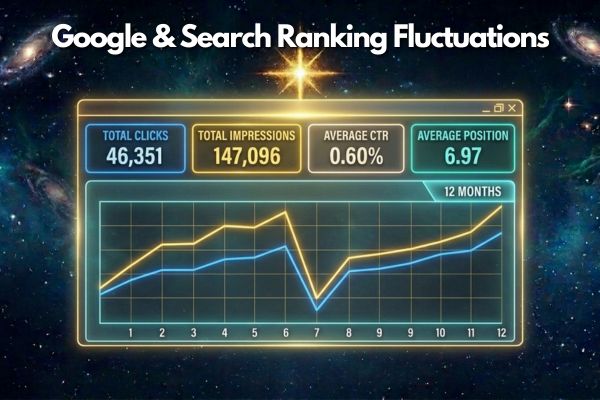
Google search ranking fluctuation refers to your website’s position changing in search results for specific keywords. This can happen daily, weekly, or even within a single afternoon.
These shifts are often called “rank volatility” in SEO circles. They range from tiny position changes to sudden, significant drops or gains.
Think of Google’s search results like a constantly shifting queue, rather than a fixed leaderboard. New content joins, older content gets reassessed, and the ranking systems behind it never truly stop working.
How Fluctuation Is Measured
Fluctuation is tracked by monitoring your average position for specific queries over time. Tools like Google Search Console, Semrush, and Ahrefs all show this data clearly.
Focus on isolating individual pages or keyword groups rather than looking at broad averages. Mixing unrelated pages together can create a misleading picture.
For example, averaging your rankings across your entire website tells you very little. A handful of strong pages can mask genuine problems happening elsewhere on your site.
New pages also tend to start lower and climb gradually. This isn’t a warning sign, it’s simply how new content earns trust with search engines over time.
Be patient with newer content specifically. Judging a page’s true performance within its first few weeks rarely gives you an accurate picture of where it will eventually settle.
Normal Volatility vs. Genuine Problem
Here’s the honest truth. Some fluctuation is unavoidable, since Google’s systems never stop adjusting.
⚠️ Warning
Reacting to every single daily shift with drastic changes to your site often causes more harm than the fluctuation itself.
A genuine problem usually looks different. Think persistent decline across multiple keywords, not a single day’s wobble.
The difference often comes down to pattern versus noise. A single keyword dropping a couple of positions is noise. Dozens of keywords steadily declining over several weeks is a genuine pattern worth investigating.
Learning to tell these two apart is genuinely one of the most valuable skills in ongoing SEO work. It saves you from wasted effort chasing shadows, and helps you focus energy where it actually matters.
Why Google Rankings Fluctuate: The Core Causes
Let’s break down exactly what’s behind these shifts, one factor at a time.
Google Algorithm Updates
Google’s algorithm never sits still. It’s constantly being adjusted, tested, and refined.
Source: Search Engine Journal
Most of these changes are so small they go completely unnoticed. But several times a year, Google rolls out larger updates that genuinely shake things up.
It helps to picture these updates on a spectrum. On one end sit the thousands of invisible tweaks happening constantly. On the other sit the handful of major, publicly confirmed updates that genuinely reshape entire industries overnight.
Core Updates vs. Minor Tweaks
Core updates are broad recalibrations of how Google evaluates content quality, relevance, and authority. These tend to cause the most noticeable ranking shifts.
Minor tweaks, by comparison, usually affect specific areas like local search or spam detection. Their impact is far more limited.
Source: Demand Sphere
That’s on top of the thousands of smaller, unannounced changes happening constantly in the background.
Understanding this distinction matters practically too. A minor tweak rarely needs any response from you at all, while a genuine core update is worth watching closely, especially if your rankings shift alongside its rollout dates.
Recent Major Update Types
You’ve likely heard names like the Helpful Content Update or Core Web Vitals update. These focus on rewarding genuinely useful content and strong page experience.
Source: Evelan
Rollouts like this genuinely take time. Your rankings can keep shifting throughout the entire window, not just on day one.
This is an important detail many site owners miss. Checking your rankings partway through a rollout and drawing conclusions can genuinely be misleading, since the update itself hasn’t finished being applied yet.
It’s generally wiser to wait until a confirmed rollout has fully completed before making any significant changes in response. Reacting mid-rollout risks solving a problem that resolves itself naturally once the update finishes.
Content Changes and Inconsistencies
Editing your own content can trigger ranking movement too, even when the edit itself is genuinely an improvement.
This surprises a lot of site owners. It feels counterintuitive that making something better could cause a temporary dip, but that’s exactly what often happens while Google reassesses the page.
Title, Heading, and Body Edits
Updating titles, headings, or body content prompts Google to reassess the page’s relevance. This can cause temporary position shifts while that reassessment happens.
Give these changes a little time to settle before drawing conclusions. A brief dip immediately after an edit doesn’t necessarily mean the edit was a mistake.
Removing or Merging Pages Without Redirects
Deleting or combining pages without proper redirects can genuinely confuse search engines. This often results in lost rankings, or the wrong page ranking for your target keyword entirely.
Technical SEO Errors
Google relies on smoothly crawling and indexing your site to rank it properly. When technical problems get in the way, rankings suffer.
These issues are especially frustrating because they’re often invisible to visitors, yet quietly devastating to your search performance behind the scenes.
Crawl and Indexing Issues
Broken links, blocked pages, and indexing errors all interfere with how Google understands your site. These issues can quietly drag your rankings down over time.
Run regular crawls of your own site to catch these problems early. Waiting until rankings visibly drop means you’re already reacting rather than preventing.
Site Speed and Mobile Usability
Slow-loading pages and poor mobile usability genuinely hurt user experience, and Google notices. Tools like PageSpeed Insights and Google Search Console help catch these problems early.
| Technical Issue | Typical Impact on Rankings |
|---|---|
| 404 errors and broken links | Confuses crawlers, wastes crawl budget |
| Slow page speed | Hurts both rankings and user experience |
| Poor mobile usability | Directly affects mobile-first indexing |
| Blocked or de-indexed pages | Removes visibility entirely |
Fixing these issues rarely produces instant results. But over time, a technically healthy site provides a far more stable foundation for consistent rankings.
Backlink Profile Volatility
Backlinks remain one of the strongest trust signals in SEO. Changes to your backlink profile can genuinely move your rankings, in either direction.
Gaining high-quality links tends to help. Losing valuable ones, or picking up toxic links, can genuinely hurt.
Regular backlink audits help you catch these shifts early, before they cause lasting damage. Set a recurring reminder to review your profile, rather than only checking when something already feels wrong.
Competitor SEO Activity
Sometimes your rankings drop simply because a competitor stepped up their game. They might have published stronger content, earned fresh backlinks, or improved their site experience.
⚠️ Warning
Staying passive while competitors actively improve their SEO is one of the quietest ways to lose ground over time.
Regular competitor tracking and gap analysis help you spot these shifts before they become a genuine problem. This doesn’t mean obsessively checking daily, but a monthly review is genuinely worthwhile.
Search Intent Evolution and Keyword Variations
Google constantly refines how it interprets what searchers genuinely want. Even subtle keyword differences, like singular versus plural, can shift how a page ranks.
Google isn’t just matching exact words anymore. It’s trying to understand the underlying intent behind every single search.
Consider two similar phrases: “conversion copywriting” and “copywriting for conversions.” A searcher might mean something slightly different with each, even though the words overlap heavily.
Naturally including related terms, synonyms, and long-tail variations helps you capture a wider range of genuinely relevant searches. This also helps reduce volatility caused by shifting search intent over time.
This doesn’t mean stuffing your content with every possible variation. It means writing naturally, in a way that genuinely reflects how real people search and speak.
Personalisation, Localisation, and SERP Testing
Search results aren’t identical for everyone. Location, device, and personal search history all shape what someone actually sees.
Two people searching the exact same phrase, at the exact same time, can genuinely see different results depending on where they’re located or what they’ve searched before.
Google also regularly A/B tests different SERP layouts and features. This alone can shift your visibility, even when your actual ranking hasn’t genuinely changed.
Featured Snippets and SERP Features Reshuffling Results
Sometimes your position stays the same, but new SERP features push you further down the visible page. Featured snippets, video carousels, and “People Also Ask” boxes all take up valuable space.
Source: Ahrefs
That’s a genuinely significant shift, even without your actual ranking position changing at all.
This is worth sitting with for a moment. You can rank exactly where you always have, and still see meaningfully less traffic, purely because the page around your listing has changed.
User Engagement Signals
How people interact with your page sends indirect signals to Google about its genuine quality. Metrics like click-through rate, dwell time, and bounce rate all play a role.
If visitors click through and leave almost instantly, that’s a signal worth paying attention to. Strong engagement, on the other hand, tends to reinforce your position.
Think about your own page from a genuine visitor’s perspective. Does it actually deliver on what your title and meta description promised? Mismatches here often show up clearly in engagement data.
Internal Linking Structure
Internal links don’t get nearly as much attention as backlinks, but they genuinely matter. They help Google understand how your pages connect and where your ranking authority should flow.
Weak internal linking can quietly contribute to ranking instability, even when everything else on your site looks fine.
A well-structured internal linking strategy also helps distribute authority more evenly across your site, rather than concentrating it on just a handful of pages.
AI and Search: How AI Overviews Are Changing Ranking Stability
AI-driven search features have genuinely changed the landscape. Traditional organic rankings now sit alongside AI-generated summaries and overviews.
Source: Colorlib
This shift means ranking well doesn’t automatically translate into traffic the way it once did. Visibility within AI-generated answers is becoming its own genuinely important consideration.
⚠️ Warning
Focusing purely on traditional ranking positions, without considering AI-driven visibility, means you're only seeing half the picture.
Adapting to this shift means thinking beyond just your blue-link position. Structuring content clearly, answering questions directly, and building genuine topical authority all help with visibility inside these newer search experiences too.
Other Contributing Factors
A handful of additional factors can contribute to ranking movement too.
Seasonality and Viral Trends
Searches for seasonal topics, like holiday shopping or tax season, naturally spike and fade throughout the year. Viral trends can create sudden, temporary shifts in user behaviour too.
Planning ahead for these predictable cycles helps you avoid mistaking normal seasonal movement for a genuine problem.
Website Redesigns and New Pages
Redesigning your site, changing URL structures, or adding new pages all prompt Google to recrawl and reassess your content. Some temporary fluctuation here is genuinely normal.
Give any major site change several weeks before judging its true impact on your rankings. Early volatility during this window doesn’t necessarily reflect the final outcome.
Negative SEO and Security Issues
Occasionally, ranking drops stem from bad actors. Spammy backlink attacks, hacked content, or scraped material can all genuinely damage your visibility.
How Long Do Ranking Fluctuations Typically Last?
Understanding typical timeframes helps you know when to relax, and when to genuinely investigate.
Short-Term Fluctuations
These usually settle within a few days to a couple of weeks. Common causes include:
- Minor algorithm tweaks
- New content still being tested and positioned by Google
- Brief competitor activity that fades quickly
Most fluctuations fall into this category, and genuinely don’t need any drastic response.
If you find yourself checking rankings multiple times a day during this window, it’s worth stepping back. That level of monitoring rarely reveals anything useful, and often just adds unnecessary stress.
Long-Term Fluctuations
If instability drags on for weeks or months, something bigger is usually at play. This often includes:
- A major core update reshaping rankings broadly
- Significant shifts in your own SEO strategy
- Negative SEO, security issues, or a genuine Google penalty
These situations require patience and a structured, methodical response, rather than a quick fix.
Recovery from a genuine long-term decline can take time, sometimes stretching until the next major update cycle. This isn’t a reason to give up, it’s simply the reality of how these larger shifts play out.
Why Ecommerce Sites Often See More Extreme Fluctuations
Ecommerce sites face genuinely unique challenges here. Constantly changing inventory, seasonal demand, and huge numbers of product pages all add volatility.
Managing thousands of product URLs often leads to duplicate content, thin descriptions, and inconsistent metadata. All of these genuinely hurt search visibility.
When a product goes out of stock or gets replaced, its page can lose rankings entirely unless it’s properly updated or redirected.
This challenge compounds at scale too. A single content or technical mistake might barely register on a five-page website, but the same mistake replicated across thousands of product pages can genuinely tank overall site performance.
Managing the Stress of Watching Rankings Move
There’s a genuine psychological side to this topic worth acknowledging too.
Constantly refreshing rank tracking tools rarely leads to better decisions. It usually just leads to more stress, and sometimes to hasty, poorly considered changes.
Set a sensible monitoring cadence instead, perhaps weekly rather than daily, unless you’re actively investigating a genuine, confirmed decline. This single habit change makes a surprisingly big difference to how sustainable SEO work feels over time.
Remember too that even experienced SEO professionals see fluctuation regularly. It’s a universal part of the job, not a sign of personal failure or a flawed strategy.
How to Diagnose a Ranking Drop: Step-by-Step
If you notice a genuine, sustained decline, follow this structured process rather than guessing.
Working through these steps methodically, rather than jumping straight to conclusions, genuinely saves time and prevents unnecessary changes elsewhere on your site
Step 1: Check for Technical Issues
Start with Google Search Console. Look for crawl errors, indexing problems, broken links, or slow-loading pages.
Step 2: Analyse Recent Changes
Review anything you’ve changed recently, including content edits, URL changes, or removed pages. Confirm proper redirects are in place, and check that no important pages were accidentally de-indexed.
Step 3: Monitor Competitor Activity
Use tools like Semrush or Ahrefs to check whether competitors have published new content, earned fresh backlinks, or improved their SEO recently.
Step 4: Evaluate Algorithm Updates and Backlinks
Check whether your drop coincided with a known algorithm update. Also audit your backlink profile for toxic links or sudden losses.
What Was Impacted?
Identify exactly which URLs, folders, or page types were affected. This helps you narrow down the root cause rather than making unnecessary site-wide changes.
How Large Was the Impact?
Look at the date range the decline started, and how many keywords or pages were affected. A handful of shifting keywords is normal. A widespread decline across many pages signals something more serious.
Why Was I Impacted?
Form a genuine hypothesis. Was this caused by something on your own site, or an external factor like an algorithm update? Check Search Console for manual actions too.
Who Took My Positions?
Compare competitor rankings before and after the drop. Sometimes it’s not a competitor at all, it’s a new SERP feature like a featured snippet pushing organic results further down the page.
How to Prevent or Minimise Ranking Fluctuations
Prevention genuinely beats reaction here. A few consistent habits go a long way.
None of these individual habits is complicated on its own. The real value comes from doing them consistently, rather than treating them as a one-off project.
Regular SEO Audits
Schedule both technical and content audits regularly. This helps you catch crawl errors, broken links, and outdated content before they genuinely destabilise your rankings.
Routine Content Updates
Refresh your pages with current, high-quality information aligned with genuine user intent. Stale content is far more vulnerable to losing ground.
Strong Technical SEO Foundations
Site speed, mobile usability, and structured data all form the backbone of stable rankings. Neglecting these makes your site an easier target for ranking drops.
Think of technical SEO as your site’s foundation, much like a building. Even the best content and backlinks struggle to hold steady if the underlying structure is genuinely weak.
Prioritise fixing the biggest technical issues first, like major crawl errors or significant speed problems. Smaller technical polish matters too, but rarely carries the same weight as these foundational elements.
Building a Stable Backlink Profile
Consistent, genuine link-building efforts help protect your authority. Regular audits let you catch and address toxic links before they cause real damage.
Source: Search Engine Journal
This constant stream of genuinely new queries is part of why Google keeps refining its systems so frequently, and why some ongoing fluctuation is simply unavoidable.
This same statistic explains why chasing a single, static ranking position often misses the bigger picture. Search itself is a moving target, and your strategy needs to reflect that reality.
What to Do When Rankings Drop
Short-term dips are normal. Don’t panic over every small movement.
⚠️ Warning
Reacting to a single day's drop with major, hasty site changes often creates more instability than it solves.
Instead, monitor your rankings over a genuine two to four week period. If things stabilise or bounce back, it was likely normal volatility.
This waiting period can feel uncomfortable, especially if revenue or leads are tied directly to your rankings. But acting too quickly, before you genuinely understand the cause, often makes the underlying problem worse.
If the decline continues, it’s time to act:
- Conduct a thorough SEO audit
- Check for technical problems like crawl errors or slow speed
- Review your content for genuine relevance and quality
- Analyse your backlink profile for losses or toxic links
- Assess whether competitors have made significant gains
A patient, data-driven approach consistently outperforms reactive panic here.
Tools and Resources to Monitor Ranking Volatility
Having the right tools genuinely makes this process manageable.
Google Search Console and the Official Status Dashboard
Google Search Console remains essential for spotting ranking drops, indexing issues, and coverage errors early. Google’s own Search Status Dashboard also lists every confirmed update, complete with dates and rollout duration.
Check this dashboard first whenever you notice a sudden shift. Confirming whether a known update coincides with your timing saves considerable guesswork.
Third-Party Volatility Trackers
Tools like Semrush Sensor, Mozcast, AccuRanker, and similar volatility trackers give you a broader view of industry-wide ranking movement. These help you tell whether a shift is isolated to your site, or part of something bigger.
| Tool Type | What It Helps You Understand |
|---|---|
| Google Search Console | Site-specific crawl, indexing, and ranking data |
| Semrush / Ahrefs | Keyword tracking and competitor analysis |
| Volatility trackers (Mozcast, AccuRanker) | Broader, industry-wide SERP movement |
| Google Search Status Dashboard | Confirmed algorithm update dates and durations |
Using several of these tools together, rather than relying on just one, generally gives you a far more complete and reliable picture.
Following Trusted SEO News Sources
Staying connected to the wider SEO community genuinely helps too. Trusted sources report real-time chatter and confirmed updates, often before official confirmation arrives.
FAQs
Why does my Google ranking keep changing every day?
Daily fluctuations usually come from minor algorithm tweaks, SERP testing, or shifting competitor activity. Some movement, especially for newer content or competitive keywords, is genuinely normal.
How can I tell if a ranking drop is serious or temporary?
Temporary drops usually recover within a few days to a couple of weeks. If the decline continues across multiple keywords and pages, it likely signals a genuine technical issue, algorithm impact, or backlink problem.
Can updating my content cause ranking fluctuations?
Yes, even small edits can trigger a temporary recalculation. If your changes genuinely improve relevance and quality, the long-term effect is usually positive, even with a brief initial dip.
How do I stabilise my keyword rankings?
Focus on regular content updates, strong technical SEO, genuine user engagement, and consistent, high-quality backlink building. Avoid major, unplanned site changes, and always monitor performance after any update.
What tools can I use to track ranking volatility?
Google Search Console, Semrush, Ahrefs, Moz, and AccuRanker all help you monitor keyword positions and spot potential causes behind ranking shifts.
Do algorithm updates always cause ranking drops?
No. Most algorithm updates simply re-evaluate content and signals. Some pages rank lower, while others genuinely rank higher, depending on how well they match current quality and relevance standards.
Should I make major changes every time my rankings drop?
No. Reacting drastically to every small fluctuation often causes more harm than good. Monitor trends over a few weeks before making significant changes.
Does site speed genuinely affect ranking stability?
Yes. Slow-loading pages hurt both user experience and technical SEO health, both of which contribute to more stable, resilient rankings over time.
Is it normal for a brand new website to see extreme ranking swings?
Yes, this is genuinely common. New sites lack the history, backlinks, and engagement signals that help Google confidently place them, so early fluctuation while rankings settle is expected.
Conclusion
Ranking fluctuations aren’t a sign that something’s broken. It’s simply how a constantly evolving search engine works.
Algorithm updates, technical issues, competitor activity, and shifting search intent all play a role, often at the same time.
The key is knowing the difference between normal, everyday movement and a genuine, sustained problem worth investigating.
Build your SEO strategy around consistency rather than chasing every dip. Regular audits, genuine content quality, strong technical foundations, and a healthy backlink profile all help you weather the inevitable volatility.
It’s also worth remembering that Google’s own systems process billions of queries daily, refining and testing constantly in the background. Expecting perfect, unchanging stability was never realistic, for anyone.
Instead, aim for resilience. A site with strong fundamentals recovers faster from genuine disruptions, and rides out normal daily noise without ever needing a dramatic response.
Keep your monitoring habits sustainable too. Checking rankings obsessively rarely helps, while a steady, periodic review genuinely keeps you informed without tipping into unnecessary stress.
Google and search ranking fluctuations will always happen. Your job isn’t to stop that movement entirely, it’s to build a site resilient enough to handle it, and bounce back stronger every time.
Tired of Watching Your Rankings Bounce Around?
Our team helps you tell normal fluctuation apart from a real problem, and builds the technical and content foundations that keep your rankings stable long-term.
👉 Talk to Our SEO Team